If someone stole your identity to open an account, make a purchase, obtain credit, or conduct another transaction, you may be trying to figure out exactly what happened. One of the biggest obstacles identity theft victims face is getting information from the business where the fraud occurred.
Federal law gives identity theft victims an important right that many consumers—and some businesses—may not know about.
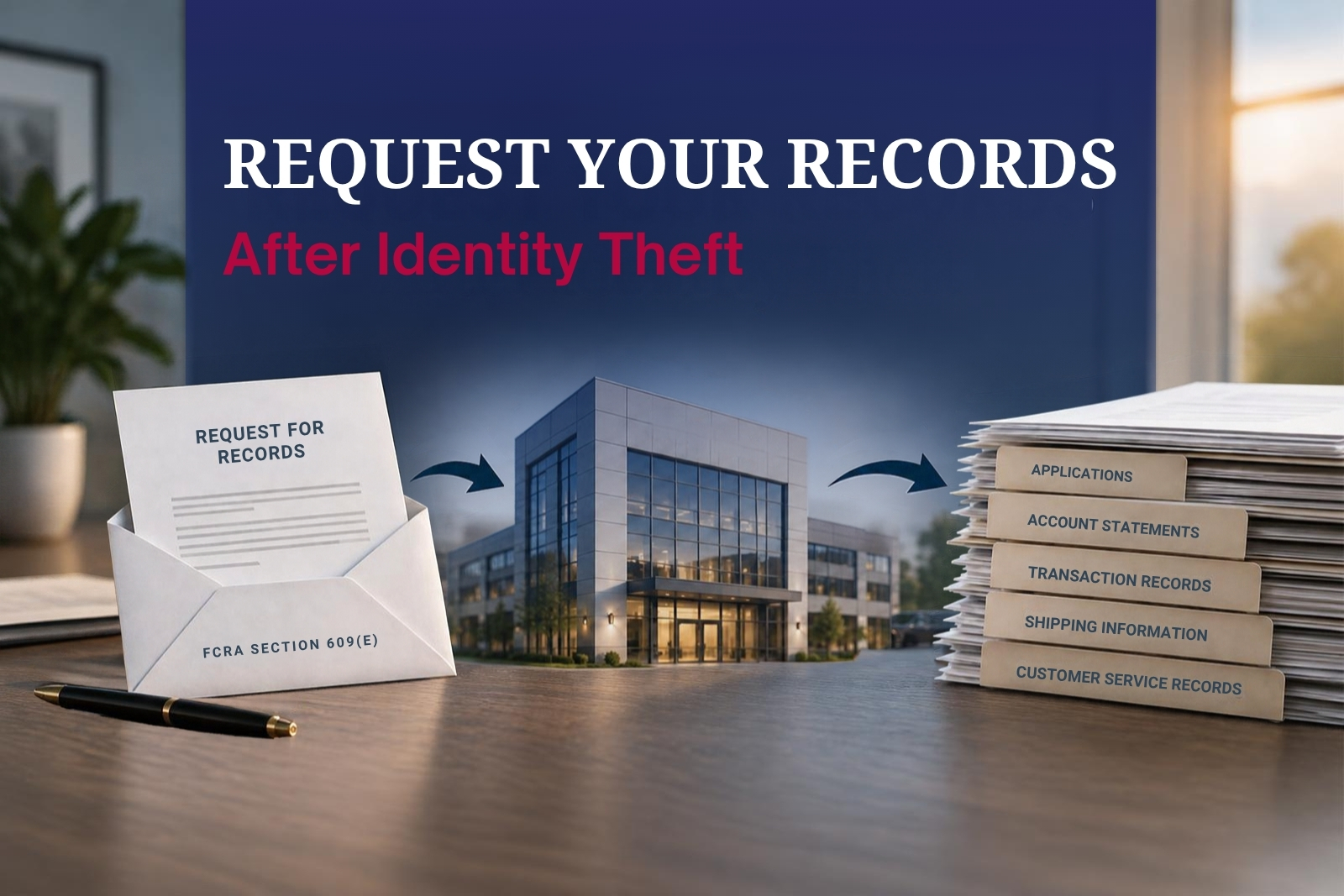
Under Section 609(e) of the Fair Credit Reporting Act (“FCRA”), 15 U.S.C. § 1681g(e), certain businesses are required to provide identity theft victims with copies of application and business transaction records relating to transactions made through the unauthorized use of the victim’s identity. In most cases, those records must be provided within 30 days and free of charge.
What Is a Section 609(e) Request?
Section 609(e) was designed to help identity theft victims obtain the evidence they need to understand and document fraudulent transactions made in their names.
The law generally applies when a business has:
- provided credit;
- sold goods, products, or services;
- accepted payment; or
- otherwise entered into a commercial transaction
with someone who allegedly used another consumer’s identifying information without authorization.
For example, imagine someone uses your personal information to open a credit account, purchase merchandise, establish a cellphone account, or make purchases using an account or payment method associated with you. The records held by the business may contain important information about how the fraud occurred and how your identity was used.
Section 609(e) gives the identity theft victim a way to obtain those records directly from the business.
What Records Can You Request?
The FCRA requires the business to provide copies of application and business transaction records within its control that evidence the transactions allegedly resulting from identity theft. This includes records maintained directly by the business as well as records maintained by another company on the business’s behalf. 15 U.S.C. § 1681g(e)(1).
Depending on the type of fraud, these records could include:
- Credit or account applications
- Account statements
- Invoices and receipts
- Records of fraudulent purchases
- Transaction histories
- Shipping or delivery information
- Records showing where merchandise was purchased
- Customer service records associated with the transaction
- Other documents relating to the fraudulent account or transaction
The FTC has specifically advised businesses to think broadly when identifying records responsive to a Section 609(e) request. The requirement can apply both to new accounts opened through identity theft and fraudulent purchases involving existing accounts.
The Business Generally Has 30 Days to Respond
Once a business receives a proper Section 609(e) request and any permitted verification information, federal law generally requires it to provide the requested records within 30 days.
The records also must be provided without charge to the identity theft victim.
Importantly, the law does not require the consumer to obtain a subpoena before requesting these records. A victim may also ask that the records be provided to a federal, state, or local law enforcement agency, or may authorize an investigating law enforcement agency to receive them.
What Does an Identity Theft Victim Need to Provide?
A Section 609(e) request generally must be made in writing. If the business has designated a specific address for these requests, the request should be sent there.
The business may also ask for information that helps identify the fraudulent transaction, such as the approximate date, account number, or transaction number if that information is known or readily available to the victim. 15 U.S.C. § 1681g(e)(3).
The FCRA also allows businesses, in appropriate circumstances, to request documentation verifying both the consumer’s identity and the claim of identity theft. This can include identification, an identity theft report or police report, and an appropriate identity theft affidavit.
These verification requirements should not be confused with a right to make consumers solve the crime before receiving the records. The records themselves may be exactly what the consumer needs to determine how the fraud occurred.
Need to Request Identity Theft Records?
Use our free Identity Theft Records Request Letter Builder to create a written request for records related to fraudulent accounts or transactions made using your identity.
Build Your Identity Theft Records Request Letter
A Business Cannot Simply Say the Records Are “Private”
Identity theft victims sometimes encounter a frustrating response: a company claims it cannot provide information about the fraudulent account because of privacy or security concerns.
That may not be an adequate response to a valid Section 609(e) request.
The FTC has explained that businesses covered by Section 609(e) must provide qualifying records to verified identity theft victims. The statute also specifically addresses circumstances in which a business may decline a request, such as when it cannot verify the requester’s identity in good faith, believes the request is based on a misrepresentation, or disclosure is prohibited by another applicable law.
In other words, a business generally cannot ignore a valid Section 609(e) request merely because the records concern an account or transaction created by the identity thief.
Federal Regulators Have Enforced This Right
Section 609(e) is not merely a technical provision buried in the FCRA.
Federal regulators have taken enforcement action against companies accused of failing to provide identity theft victims with the records they were entitled to receive.
Why These Records Matter
Obtaining the fraudulent application and transaction records can be an important step toward understanding what happened.
Those documents may reveal information such as:
- when the fraudulent account was opened;
- what personal information the identity thief used;
- what purchases or transactions were made;
- where products were shipped or delivered;
- how the fraudulent account was established; and
- other details that may help document the identity theft.
The records may also assist consumers when disputing fraudulent accounts, working with law enforcement, correcting inaccurate information appearing on consumer reports, or otherwise attempting to repair the damage caused by identity theft.
What If a Business Refuses to Provide the Records?
If you submitted a proper written Section 609(e) request and the company refuses to provide the records, provides only some of the responsive records, or fails to respond within the required timeframe, keep copies of everything.
Save your original request, proof of delivery, emails, letters, identity theft reports, responses from the company, and notes regarding telephone conversations.
A company’s failure to comply with its obligations under the FCRA may warrant further investigation.
Were You Denied Access to Your Identity Theft Records?
If you requested records related to identity theft and the business refused to provide them, failed to respond, provided only some of the records, or charged you for them, you may have a case. Francis Mailman Soumilas, P.C. can review what happened and help you understand your options under the FCRA.
We Help Consumers Protect Their Rights Under the FCRA
Identity theft can create problems that extend far beyond an unauthorized transaction. Fraudulent accounts and inaccurate information may affect a consumer’s credit, employment opportunities, housing applications, and financial life.
The attorneys at Francis Mailman Soumilas, P.C. represent consumers in matters involving the Fair Credit Reporting Act, identity theft, inaccurate consumer reporting, and other consumer protection laws.
Were You Denied Access to Your Identity Theft Records?
If you requested records related to identity theft and the business refused to provide them, failed to respond, provided only some of the records, or charged you for them, you may have a case. Francis Mailman Soumilas, P.C. can review what happened and help you understand your options under the FCRA.
Call us at 1-877-735-8600 or fill out our online form to Request a Free Case Review